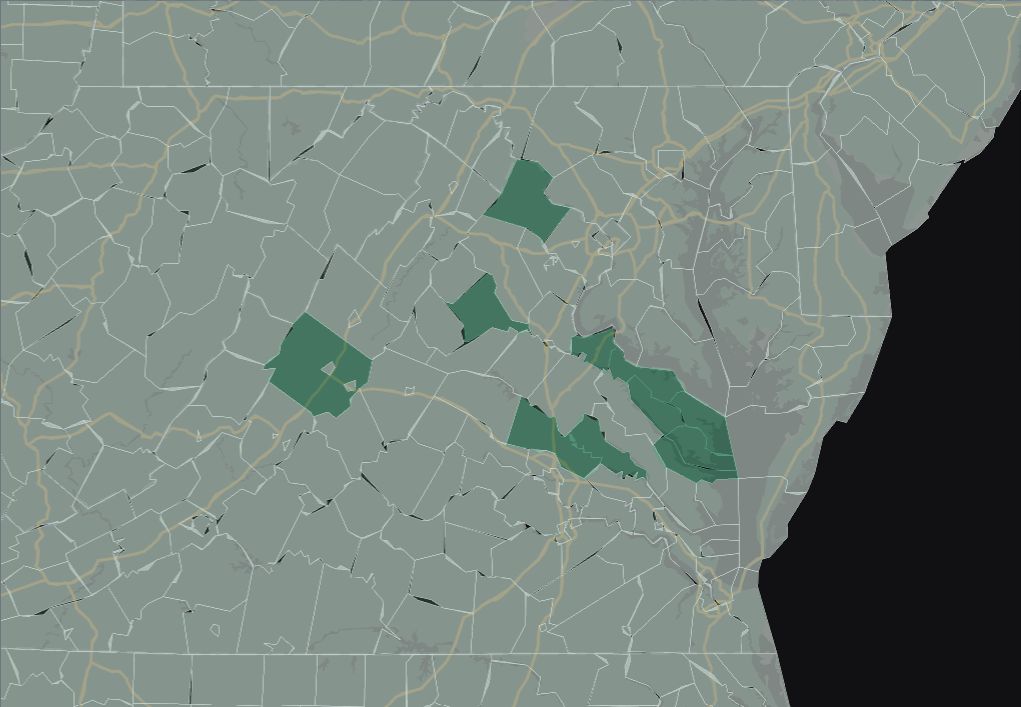
A rapidly expanding internet service provider (ISP) in the United States is focusing on delivering high-speed internet to rural communities where unserved and underserved locations are particularly prevalent. Initially, the ISP explored nationwide network expansion opportunities but later realized they needed more granular, comprehensive data to identify high-potential regional markets and narrow its geographic scope.
Broadband Network Expansion Challenge
The ISP aimed to achieve coordinate-level accuracy when evaluating which structures could be served as part of its multi-phase broadband deployment initiative. However, publicly available FCC BDC datasets and geocoded addresses did not provide the detailed competitive insights or geographic precision needed to pinpoint the best expansion targets and meet funding and compliance requirements. Without reliable, granular data, the ISP was unable to move from broad market interest to precise, tactical planning and execution.
Data Solution
The provider licensed Broadband Fabric ServiceLandscape Data, which offers address-level information, including structure centroid identification of Broadband Serviceable Locations, FCC BDC provider-reported service availability, and federally funded program datasets.
These datasets enabled the team to:
- Analyze competitor coverage per structure
- Identify coverage gaps and low-quality service areas
- Validate coordinates and addresses of all serviceable structures - mainly in unserved and underserved areas
- Forecast market penetration and ROI
As the strategy evolved, the provider renewed access to targeted statewide datasets and used the Broadband Fabric's insights to guide an extensive fiber buildout in the northeastern United States.
Network Expansion Results with ServiceLandscape Data
- Identified high-return-on-investment markets for extensive fiber buildouts
- Integrated data into network design software to map network routes to Broadband Serviceable Locations - targeted exact coordinates of structure-centroid
- Grew fiber network footprint in 6 counties, going from 3,700 locations served to 12,500 in 6 months
- Post expansion buildout - integrated new locations covered, and existing customer addresses into a single system to:
- Tracked locations covered in network footprint to support cross-department data usage: sales, marketing, customer support, etc.
- Streamlined compliance filings with federal reporting mandates - FCC’s Broadband Data Collection, etc.